
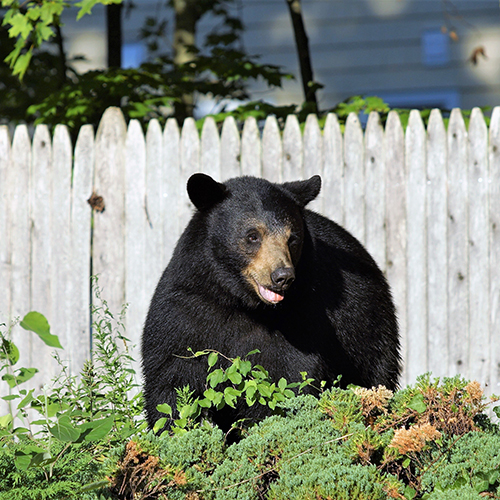
With the arrival of Spring just two weeks away, many of us will be taking to the streets and trails more frequently for a walk around the neighborhood. Black bears are increasingly common in Connecticut, even in heavily populated residential areas. How should we be thinking about co-existing with our new visitors?
The State of Connecticut has some answers. What follows is information and advice from the Connecticut Department of Energy and Environmental Protection (DEEP) that can be found on the CT.GOV website.
All residents should take time to become “BearWise” and learn about best practices to both reduce the likelihood of an encounter with a bear and know what to do in the event of an encounter.
According to the CT Wildlife Division, prevention is the only effective, long-term solution for human/bear conflicts. The primary contributing factor to human-bear conflicts is the presence of easily-accessible food sources near homes and businesses. Black bears that consume human-associated food (e.g., birdseed, trash, pet food) on a regular basis become habituated (comfortable near people) and food-conditioned (associate humans, houses, and neighborhoods with food). As the bear population continues to grow and expand its range in Connecticut, and bears become increasingly food conditioned, conflicts will continue to increase. Food-conditioned bears pose a greater risk to public safety and often cause more property damage to houses, cars, pets, and livestock.
Where are black bears found in Connecticut?
Black bears occur throughout much of the state. In 2023, bears were reported from 165 of the state’s 169 towns and cities. Connecticut has a healthy and increasing bear population with the highest concentration in the northwest region of the state.
Why are bears in my neighborhood?
Many homes are in or near bear habitat. The bear population is healthy and increasing in Connecticut and sightings have become more common. Bears spend time in neighborhoods because food sources are abundant and easy to access (birdfeeders, garbage, open compost, grills, etc.) They will readily use these food sources and revisit the same location over and over again. Bears that are attracted to human-associated food sources may lose their fear of people. Both you and your neighbors need to take steps to make yards and neighborhoods less attractive to bears, mainly by removing any food sources.
What should I do if I see a black bear in my yard?
If you see a black bear in your yard, enjoy the sighting from a distance and report your sighting. However, be sure you are not doing anything to attract the bear to your yard. Attempt to scare the bear off by making noise, such as banging pots and pans, shouting or using an air horn or whistle. Once the bear has left the area, take a close look at your yard for potential bear food sources, such as birdfeeders, pet food, dirty barbecue grills, open compost, or trash, and REMOVE those food sources IMMEDIATELY. Bears have incredible long-term memory and will revisit places where they have found food, even months or years later. Bears that are frequently fed, either intentionally or unintentionally through birdfeeders or garbage, may become habituated and lose their fear of people. If a bear behaves in a way that is a threat to public safety, it may have to be euthanized by the department.
Is it safe to hike, run, bike, or walk my dog in the woods?
It is safe to enjoy the outdoors regardless of what region of the state you live in or are visiting. If your dog is hiking with you, it is imperative that you keep the dog on a SHORT leash and DO NOT let it roam free – this is for the safety of your dog, yourself, and wildlife. When visiting areas where bears are more common, hike in groups and make your presence known by talking or singing. Keep small children close by and on trails. Although black bears have injured and even killed humans in North America, such cases are exceptionally rare. Always be aware of your surroundings and if you happen to encounter a bear, follow the advice offered in the next question.
What should I do if I encounter a bear while on a trail in the woods or out for a walk?
Remain calm and observe the bear from a distance. Do not approach or try to get closer to a bear. If the bear is unaware of your presence, back away or make noise which will often cause the bear to flee. If the bear is aware of you and does not flee, talk to the bear in a calm voice and back away slowly. Never run or climb a tree. If the bear approaches, be offensive. Make more noise, wave your arms, and throw objects at the bear. Black bears rarely attack humans. However, if you are attacked, do not play dead. Fight back with anything available.
Get all the 2025 information on bears in Connecticut including bear population, conflicts, feeding ordinances, comparisons with other states, and the best ways to coexist with black bears HERE.


